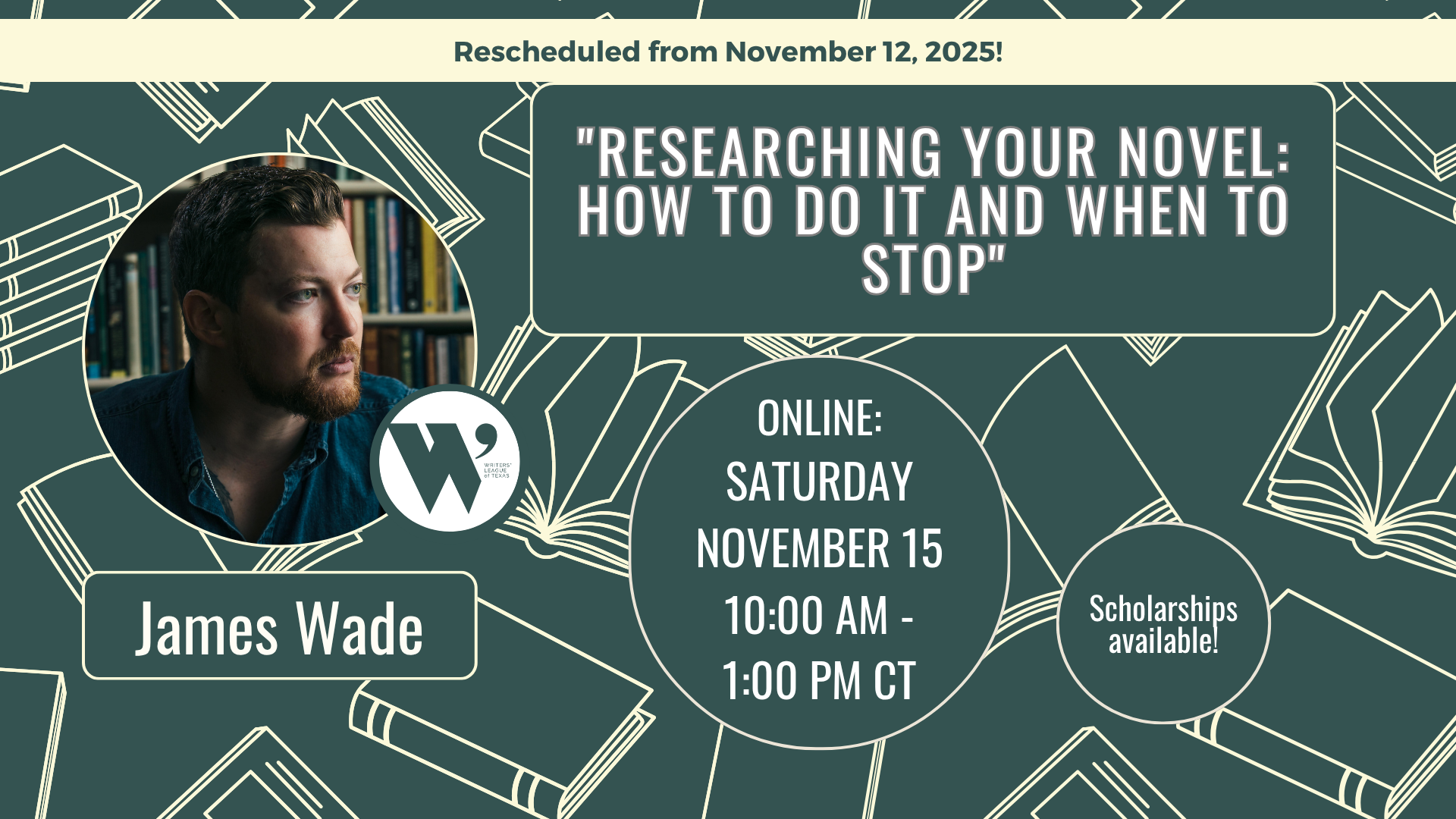
“[F]ocus on what you can control. And the thing you’ll always be able to control is the writing: your commitment to it, your love for it, and the way you approach the page each day.” —James Wade
On Saturday, November 15, James Wade will teach “Researching Your Novel: How to Do It and When to Stop.” In this class, students will learn all the various roles research can play in a writing project, discovering how to find the best sources and what material is most important. This class is a part of the Novel Writing Class Package.
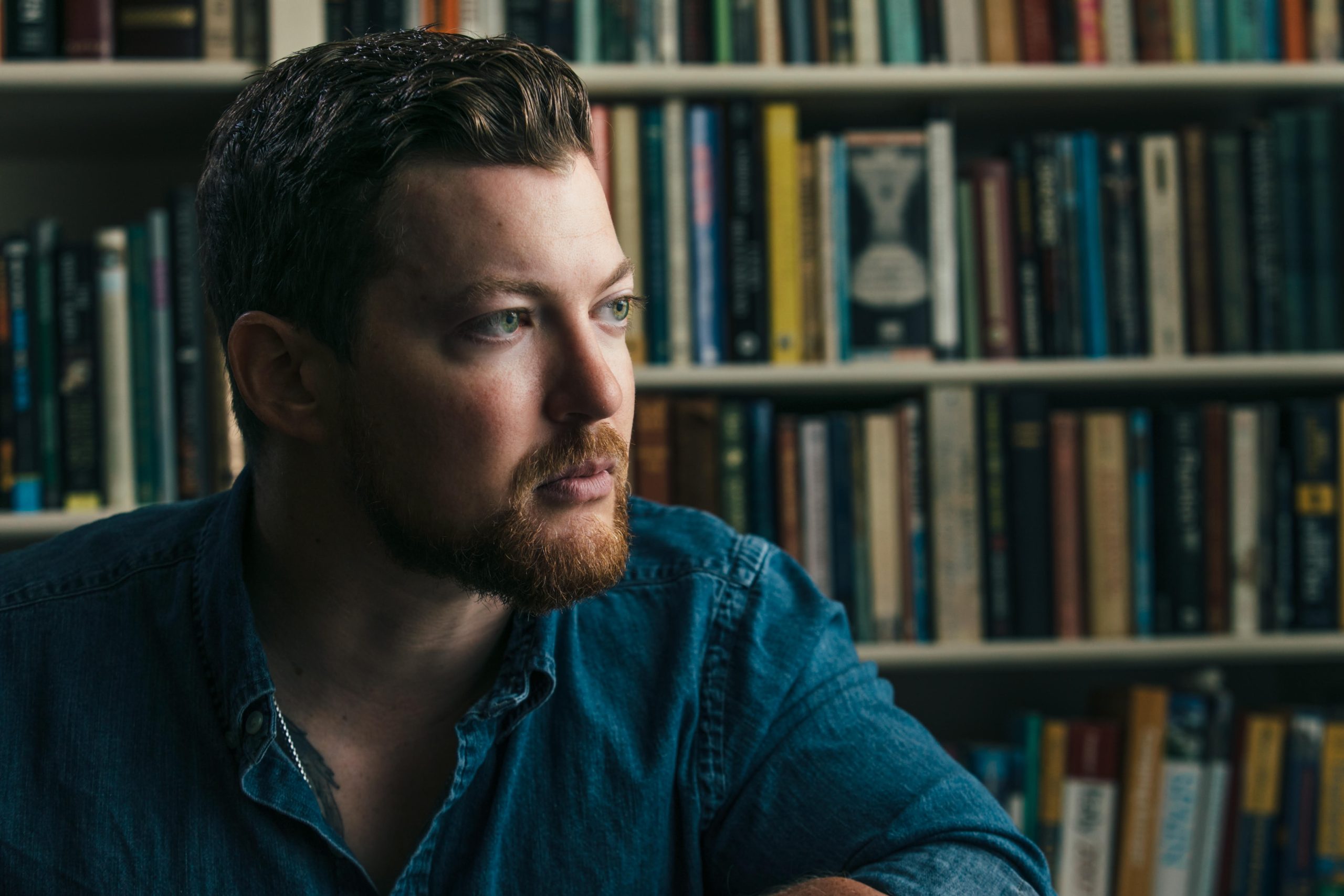
James Wade is the youngest novelist to win two Spur Awards from the Western Writers of America and the recipient of the MPIBA’s prestigious Reading the West Award. His debut novel, All Things Left Wild, was listed as one of the most influential westerns of the 21st century by True West Magazine and included in the Los Angeles Times‘ “1,001 Novels: A Library of America.” His Southern Gothic mystery, Beasts of the Earth, was named a Best Book of 2022 by both Deep South Magazine and The Southern Review of Books. His new novel, Narrow the Road, received a starred review from Publishers Weekly. James is a four-time finalist for the Austin Chronicle‘s Best Writer in Austin award, and his work has appeared in Texas Highways, Writers’ Digest, and numerous additional publications. James lives and writes in the Texas Hill Country with his wife and children.
Here’s what James had to share with us:
Who are your earliest influences? What people and books made you a writer?
James Wade: Roxaboxen made me a reader when I was four, and then everything since then made me a writer– every book, every life experience, every time it rained and the lizards would crawl up on the window sill and we’d watch the storm together. But there were a couple of books and stories along the way that really had an impact: All The Pretty Horses by Cormac McCarthy, “A Good Man is Hard to Find” by Flannery O’Connor, Provinces of Night by William Gay, Look Homeward, Angel by Thomas Wolfe, and Plainsong by Kent Haruf.
What writing challenges have you faced? What have these challenges taught you about your process?
JW: Everything about writing is a challenge. It’s beautiful and life-affirming but it’s challenging. Time management, self-confidence (or lack thereof), discipline, ego, the structural logistics of a story, the attention to craft– not to mention the vulnerability of submitting to agents, then publishers, working with editors, marketing, branding, book sales (or lack thereof), not letting good or bad reviews change who you are as a writer– all of it is incredibly difficult. What I’ve learned after five novels, two multi-book publishing deals, and a handful of really high and really low moments, is to focus on what you can control. And the thing you’ll always be able to control is the writing: your commitment to it, your love for it, and the way you approach the page each day.
From your perspective, what’s the most rewarding part about being a writer?
JW: A good sentence. I’ve had some wonderful moments in my career, but none of them compare to the feeling of writing a really good sentence, knowing (despite all the self-critique for all the other sentences) that it’s a really good sentence, and then taking a little moment of satisfaction before moving on to the next probably-not-as-good sentence.
Who do you write for?
JW: Myself. The person I’d like to become.
What do you hope writers will learn from your course?
JW: First and foremost, the fundamentals of research and the role it plays in novels, stories, and even memoirs. But also, I hope folks will take some confidence from the course, some motivation, and maybe give themselves permission to do that thing they’ve always wanted to do with their work but were waiting for someone to say, “go for it.” I hope they’ll learn to go for it.
—
Thanks, James!
Click here to learn more about James’ upcoming class.