“The difference between people who finish a novel and people who don’t is tolerance for frustration.” —Amanda Wenger
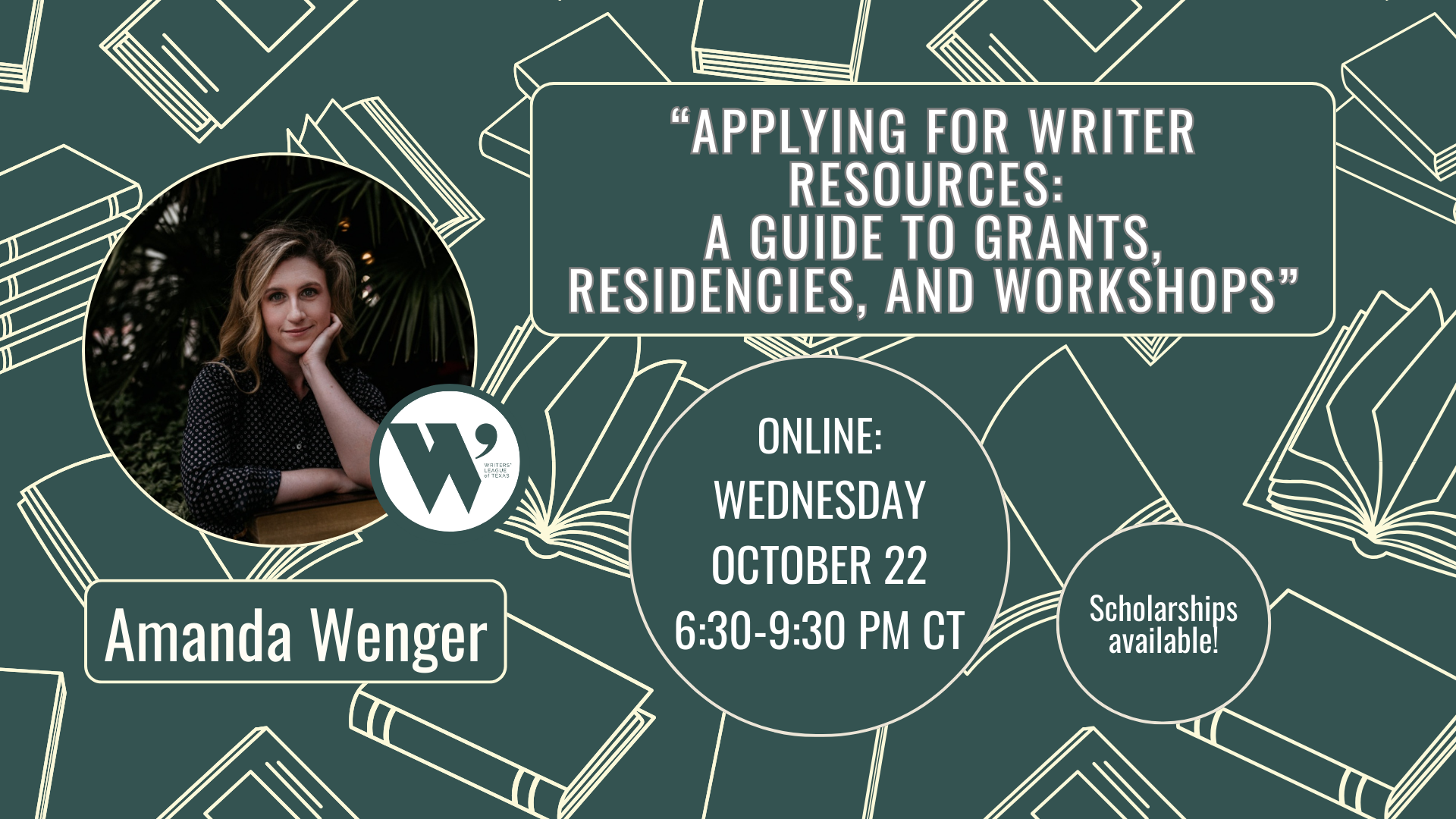
On Wednesday, October 22, Amanda Wenger will teach “Applying for Writer Resources: A Guide to Grants, Residencies, and Workshops.” In this class, students will learn how to find invaluable artist resources, how to craft a competitive application, and what to expect after acceptance.

Amanda Wenger (she/her) is a Houston-based writer with a background in critical care nursing. She is a former Writers’ League of Texas Fellow, a FORGE NYC Fellow, and the recipient of an Elizabeth George Foundation Grant. Her work has been supported by Hedgebrook, the Vermont Studio Center, the Banff Centre for Arts and Creativity, and The Kenyon Review. She has designed and facilitated writing workshops for health professionals as an artist in residence for the Medical Humanities program at Texas Children’s Hospital. Amanda serves on the Writers’ League of Texas Board of Directors.
Here’s what Amanda Wenger had to share with us:
Who are your earliest influences? What people and books made you a writer?
Amanda Wenger: I read a lot of Tamora Pierce, Redwall, and Goosebumps as a kid! My mom is also a writer, and she was one of the first people who encouraged me to tell my own stories.
What writing challenges have you faced? What have these challenges taught you about your process?
AW: In the beginning, it was hard to find the time and focus to sit down and do it. It was also humbling, as a person who was established in a non-creative career, to go back to being bad at something. It takes a lot of courage to let yourself be bad for the amount of time it takes to get good. Learning feels uncomfortable while it’s happening. The difference between people who finish a novel and people who don’t is tolerance for frustration.
From your perspective, what’s the most rewarding part about being a writer?
AW: The most rewarding part of becoming a writer is learning to listen to myself. I dump my thoughts out while drafting, and I discover what I really think as I revise.
Who do you write for?
AW: I write for the attentive reader—I want to create the kind of story that holds up to a close reading, the kind you read again even though you know what happens. I want to reward readers who actively engage with the text.
What do you hope writers will learn from your course?
AW: Everybody could use some support when it comes to making their art. I hope my course offers writers the confidence to apply for time, space, and money to do their creative work! I break the process into easy steps to make it as accessible as possible.
—
Thanks, Amanda!
Click here to learn more about Amanda’s upcoming class.